As electric mobility scales rapidly, the need for reliable, flexible, and intelligent energy storage has never been greater
Enhancing Grid Stabilization
Enhancing Grid Stabilization
Provides quick response capabilities to balance supply and demand, maintaining grid stability and preventing fluctuations.
Mitigating Power Outages
Mitigating Power Outages
Stores energy for backup use, ensuring uninterrupted power supply during outages or grid failures.
Reducing Peak Demand
Reducing Peak Demand
Discharges stored energy during peak periods, lowering the strain on the grid and reducing energy costs.
Powering the Future of EV Infrastructure
As electric mobility scales rapidly, the need for reliable, flexible, and intelligent energy storage has never been greater. Battery Energy Storage Systems (BESS) form the backbone of modern EV infrastructure—ensuring consistent power availability, optimised energy usage, and grid stability.
A BESS is an advanced energy solution that stores electricity in batteries and releases it when needed.
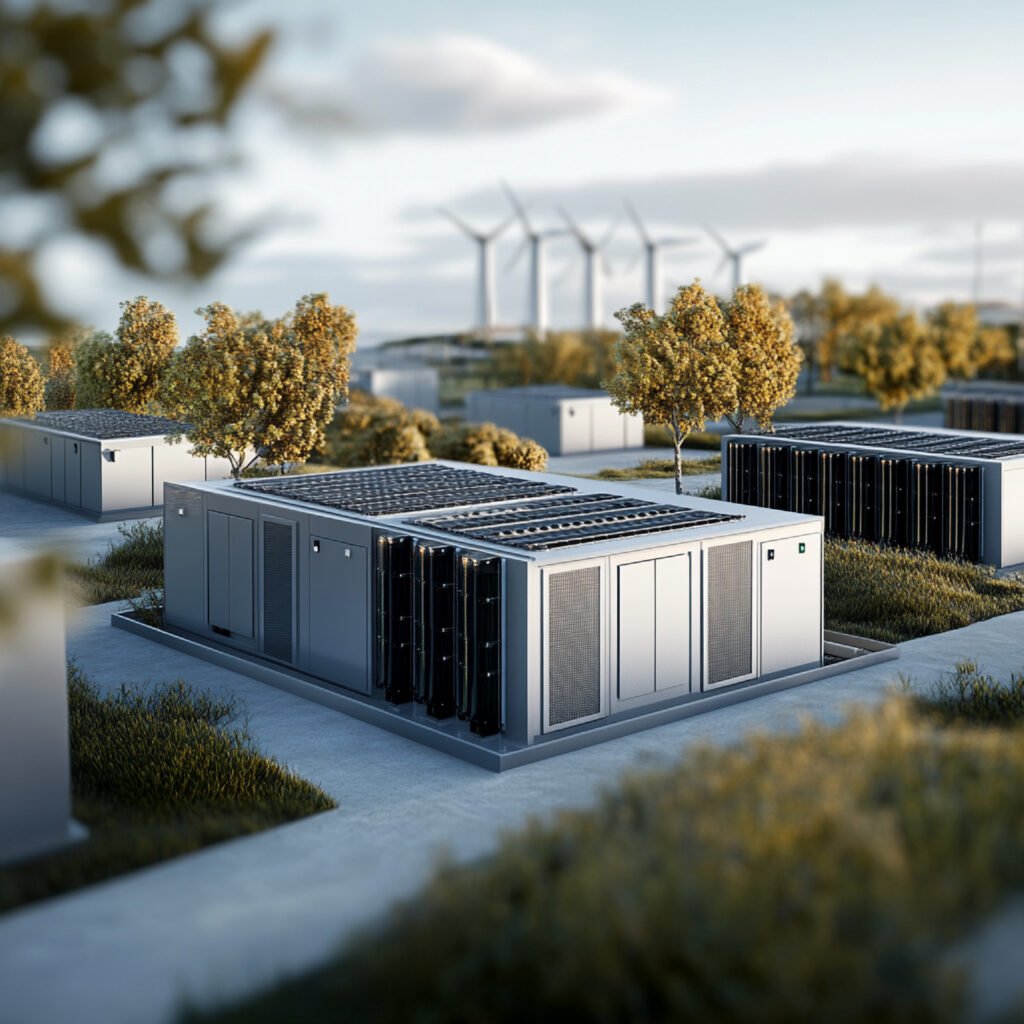
These systems are widely deployed across EV charging networks, renewable energy installations, commercial facilities, and smart grids to balance supply and demand efficiently.
Our Accreditation
What Is a Battery Energy Storage System (BESS)?
A Battery Energy Storage System (BESS) is an integrated technology designed to store electrical energy—typically generated from renewable sources such as solar or wind—and deliver it reliably during peak demand, power outages, or grid constraints.
Within EV infrastructure, BESS plays a critical role by:
Supporting fast and ultra-fast charging stations
Reducing strain on the grid during peak charging hours
Enabling energy independence and cost optimisation
Ensuring uninterrupted charging availability
By addressing the intermittent nature of renewable energy and fluctuating grid conditions, BESS enables scalable, resilient, and future-ready EV ecosystems.
How Does BESS Work?
Charging Phase
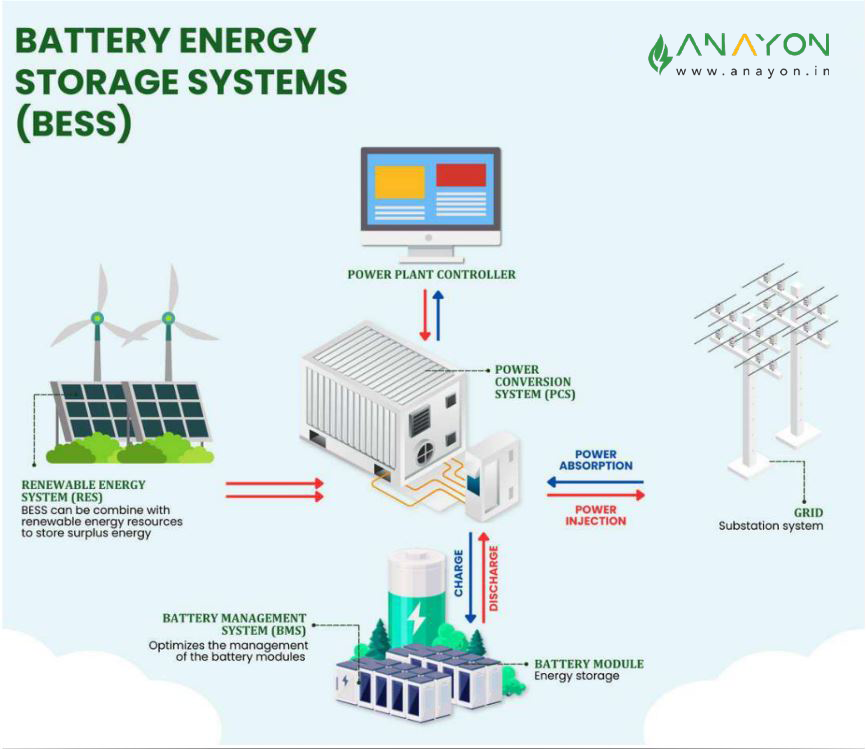
Electricity is drawn from solar panels, the utility grid, or other power sources and directed into the system.
Energy Storage Phase
The energy is stored in high-performance battery cells as direct current (DC).
Discharge Phase
When power is required, the stored DC energy is converted into alternating current (AC) through inverters and supplied to EV chargers or other electrical loads.
Advanced control systems continuously monitor and manage this process to ensure safety, efficiency, and optimal performance.
Key Applications of BESS
EV Charging Infrastructure
Supports high-power charging without overloading the grid
Enables peak shaving and demand charge reduction
Ensures reliable power for fast and ultra-fast chargers
Commercial & Industrial (C&I)
Manages peak loads and improves energy efficiency
Provides backup power for critical operations
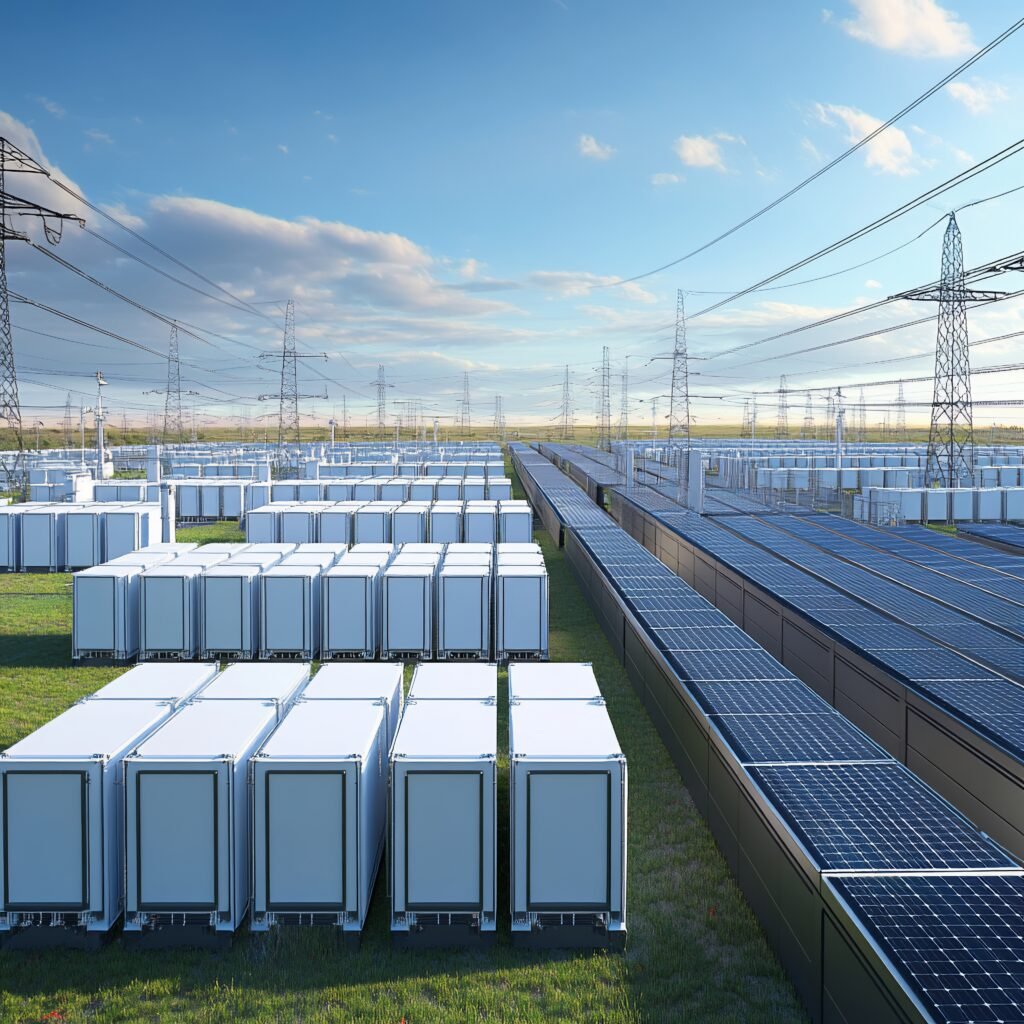
Utility-Scale Energy Storage
Enhances grid stability and reliability
Defers costly grid expansion and upgrades
Microgrids & Off-Grid Solutions
Enables energy self-sufficiency in remote or constrained locations
Ideal for campuses, industrial parks, and fleet depots
What Makes a BESS More Than a Battery?
A BESS is a fully integrated energy system, not just a collection of batteries. It includes:
High-performance battery modules
Battery Management System
Power Conversion System
Energy Management System
Thermal management and protective enclosures
Together, these components ensure intelligent control, high safety standards, and long-term reliability.
Advantages of BESS
Cost-effective storage of excess renewable energy
Reliable backup power during outages or extreme conditions
Load balancing and peak demand management
Improved power quality and voltage stability
Fast response times for dynamic energy needs
Scalable and easy to deploy across applications
Built for the EV Ecosystem of Tomorrow
From fast-charging hubs to fleet depots and renewable-powered microgrids, our BESS solutions are engineered to support the evolving demands of electric mobility—efficiently, intelligently, and sustainably.